Monday, January 17, 2011

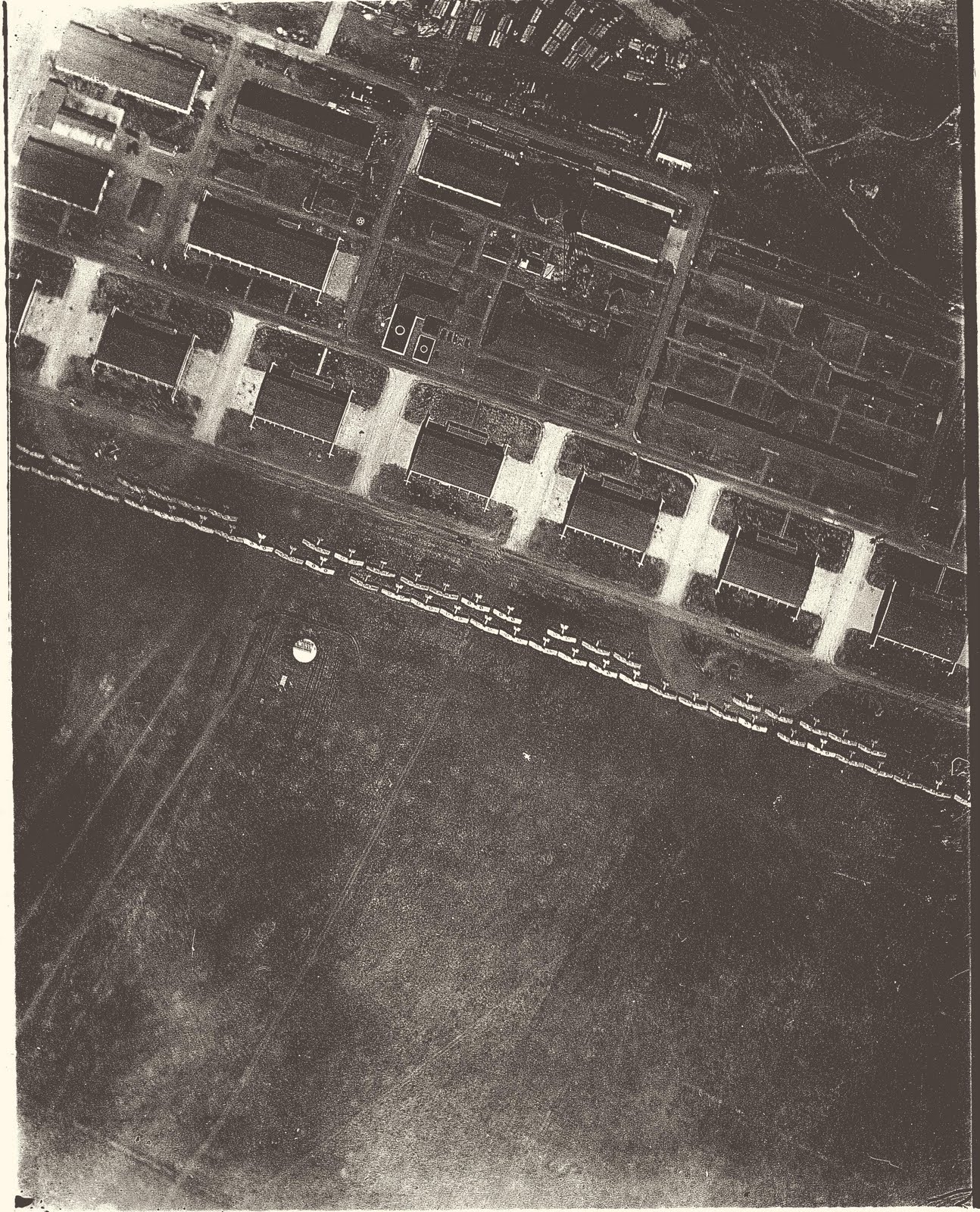
1918 "Flyin' Frolic" Love Field, Dallas TX

The end of WW 1 was celebrated Texas style on November 12 and 13, 1918 in Dallas Texas at Love Field Air Corps Training Depot. This event, dubbed "Flyin' Frolic" was attended by thousands. Aerial exhibitions were enjoyed as well as other technological marvels of the day.

Here are a few photographs from a collection given to my dad in the 1970's by a friend Charles "Uncle Charley" Dawson. Some of these photos were placed in the Air Power Museum back in the 1970's by dad.
Click on the images to enlarge...

Lt. William T Campbell and the Curtiss Jenny
in which he performed 169 consecutive Loops

Historical Records:

This DallasNews.com article by Robert Miller (Jan.16,2008) gives an excellent overview of the event and also highlights the artwork of Walter Matt Jefferies and the subject exhibit placed in the Frontiers of Flight Museum, by Matt's brother, Richard Jefferies.

Copies of the beautiful "Flyin' Frolic" images painted by Matt Jefferies for display at the Pentagon may be acquired through Richard Jefferies at this webpage dedicated to the works of Matt Jefferies.

In 2005, the University of Texas at Dallas featured a lecture by Dr. Erik D. Carlson called: “The Flyin’ Frolic: U.S. Military Aviation, Love Field and the End of World War I,”. This webpage details the lecture event.

Some more photographs from this event are on file at the Dallas Municipal Archives. Go to their related website here.

The book, "Winning Causes: World War Stories" by John Gilbert Thompson and Inez Bigwood also covers this topic with a unique Aerial Parachute Photograph available here.


Prologue:

As time permits, I plan to work at getting better quality scans of these photos. But for now, these are the best I have. I think most of this blog's readers will enjoy these.

Notice the American flags flying off each airplane's left wingtip.


I counted 53 Jennys in this photograph!!

Wow!

Tuesday, January 11, 2011

Cabin Wacos


photo by Tom Eggert - click on photo to enlarge

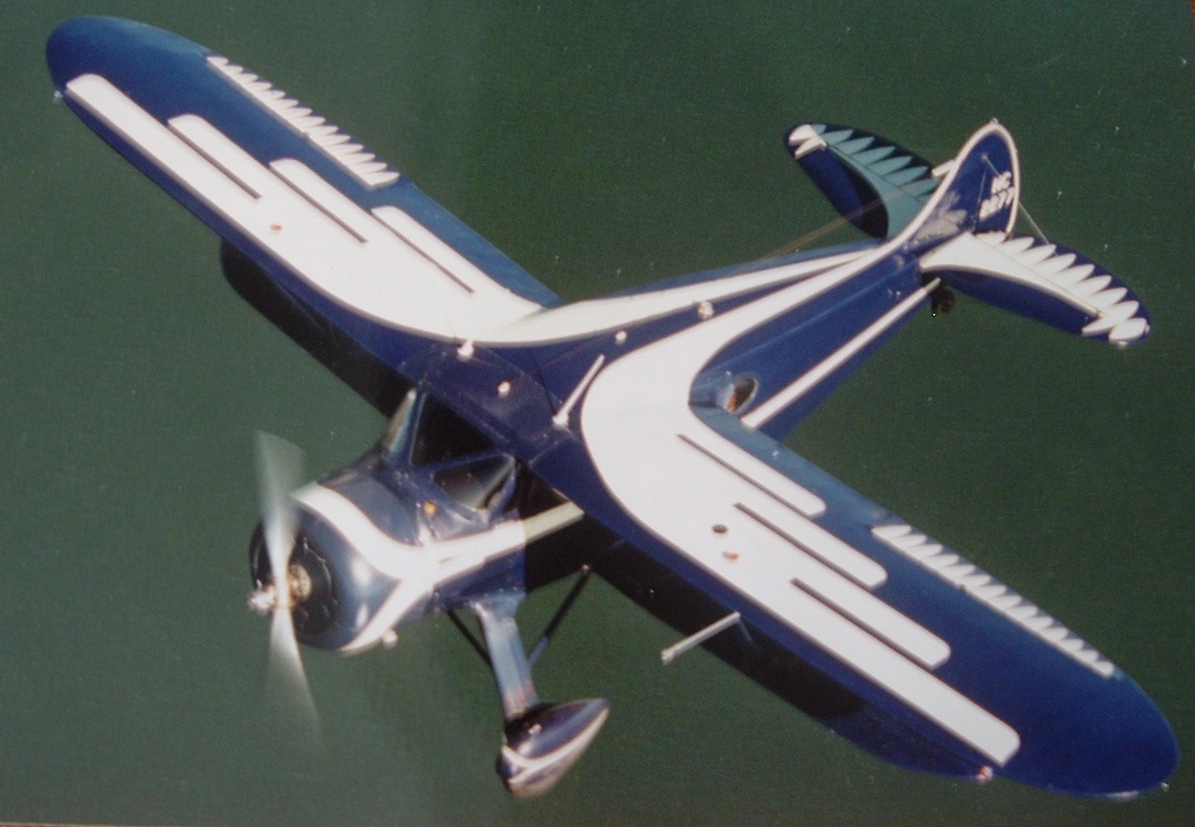
My friend Tom Eggert in Minnesota recently sent me this great photo of his beautiful Waco YKS-7 taken along with Waco ZQC-6 (NC2277) in the foreground. What a nice picture! Two Gorgeous Cabin Wacos from Minnesota. I am so looking forward to flying with Tom in his Waco someday.

The C-6 holds a special place in our family's memories. Now owned by David Schroeder in Eagan MN, NC2277 came into the Bowden family in 1978. Dad and I drug it home on a trailer from Ponder Texas. The story goes that this airplane was crash-landed on the bottomland of the Red River in the late 1960's after an in-flight fire. The owner/pilot at that time was Jack House. The lower wings and landing gear had been wiped out. The basket of remaining parts had been stored and passed around for over a decade. By the time dad bought it, there was no wood to be found for the fuselage. There were no lower wings. No landing gear, No engine. Some cowling parts. A real basket case.


NC2277 taken in the 1950's. photo credit: AAHS Archives


In-flight photos by Terry Bowden, shot from a Cessna 172D photo plane.


Dad and I built the lower wings from scratch using pictures as a guide, a rib jig we got from a friend, and a wing sketch on 8 X 10 sheet of paper. Dad absorbed himself in this airplane for thousands of hours over a 5+ year period. Among the improvements we made, was an engine change to 275 hp Jacobs (it was formerly a 350 hp Wright powered ship). The engine swap included a modified Cessna 195 "dyna-focal" engine mount which made this one of the smoothest Wacos around. After making the mistake of using VW Beetle brakes, we later installed a set of Cleveland wheels and brakes with a locking tailwheel, which finally made it somewhat controllable on the ground. Those '36 Wacos have a narrow gear and with 100 gallons of fuel in the upper wing, you really have a ground-loop sensitive airplane. The C-6 is one airplane that requires a good set of brakes.

Dad spent hours and hours on the finer details of this airplane. I can remember how the strut farings were literally made over and over again until finally getting them just right. Dad was generous with soundproofing, all glass windshield, custom-made woodwork with inlaid trim on the instrument panel... a really nice interior. First flight after restoration was in 1984.

In comparison to the F17D Staggerwing we later had, the Waco was quieter, cooler, and more comfortable in the cabin. Great for long trips. The unique paint job on this airplane was copied from a factory sketch that remained with the airplane paperwork. Dad corresponded with Ray Brandley who recalled the original colors which were custom-ordered by the Schweitzer Cummins corp in 1936. Mom and Dad flew this airplane to Blakesburg IA, Bartlesville, OK, and other fly-ins over the years and really enjoyed how it flew.

I am glad to see that Mr. Schroeder is taking good care of ol' NC2277.


Our first Waco was a YKS-6, NC16507. Dad bought it in 1977. We kept this airplane for a couple of years... rejuvenated the fabric, replaced some of the interior, did a top overhaul and fixed a TON of leaks on the 245 Jake. It was a sweet flier. We dont have many photos of this airplane. When it sold it went out to the West Coast. It is still on the FAA registry in Rosamond Calif.

Tuesday, November 23, 2010

NR482N The World's Fastest Travel Air Monoplane

Photo Credit Parks College of Saint Louis University, Archives

The Doolittle 400 Racer

Speaking of fast Travel Airs, here's another airplane that might not immediately come to mind. But this airplane may have actually held the title of "World's Fastest T.A. Monoplane", at least for a few hairy seconds.

Photo Credit, San Diego Air & Space Museum

This is the story of one mis-adventure (there were few) in the life of the famed aviator, James H. “Jimmy” Doolittle and the plane he called “the 400 racer”. The plane, formerly known as the “Shell Mystery Ship” started life as serial number 3 of the factory specially-built Travel Air model R (also known as the "Mystery S" model).


Amidst the Great Depression in the early 1930’s, most folks were lucky if they were able to hold down their jobs. Jimmy Doolittle, having already established himself as one of the country’s premier pilots was fortunate to have many different enterprises. But his mainstay employment was with the aviation department of Shell Oil Company. Doolittle, along with aviator Jim Haizlip, were the Shell company’s publicity faces of aviation. One of the many airplanes operated by these corporate pilots for Shell was a Travel Air model R, a.k.a. “Mystery Ship”, which they each flew in various races and public events.

By 1931, the airplane had been badly damaged and so the company decided to get out of racing altogether. So Mr. Doolittle acquired the remaining airplane and took it to the Parks Air College CAA approved repair depot for refurbishment and some major design changes dreamed up by Doolittle. The result was a one-of-a-kind Travel Air racing machine.


BEFORE (click on images to enlarge) and AFTER


Historians have attempted to tell the story of this airplane, but it seems the design details of this unique airplane have been intentionally erased from history. The best modern-day article I've found on the subject was the following one by the late Mr. Truman C. "Pappy" Weaver.

Click for Larger Image


Weaver’s article (EAA publication, "The Golden Age of Air Racing") provides some important facts about this airplane. But one of the details in his account has been disputed by air race historians. His article states, “Part of the modification was hiding the small struts that braced the wings – which gave the racer a gull configuration.” There is no doubt that this airplane had a very different wing-to-fuselage fillet appearance. But some have said that the original wing brace struts were eliminated altogether by beefing up the wing carry-through and attachment structure. Perhaps there is someone still around who can clear this up. Or possible some documentation may exist. Hopefully something will turn up to settle this claim. Whichever the case, the change was expected to provide improved speed and performance.


It must have been a most spectacular event on the day Doolittle took delivery of his prized machine. Spectacular to see this magnificent airplane take to the skies... but then in the most unexpected way... come crashing to a dismal end. Thankfully, Mr. Doolittle managed to parachute to a safe landing. But not so for his dreamy Travel Air.


Below are some news accounts published within days of the event. In reading these articles, I've concluded this to be one of those unfortunate endings in a test-pilot's work in pushing the design envelope. Doolittle managed to reach a speed reportedly over 250 miles per hour before tragedy struck. High-speed aileron flutter, he proved, is usually catastrophic. Sad, but true... Some designs were just not meant to become reality.


Barnstmr's Random Slideshow

Blog Followers